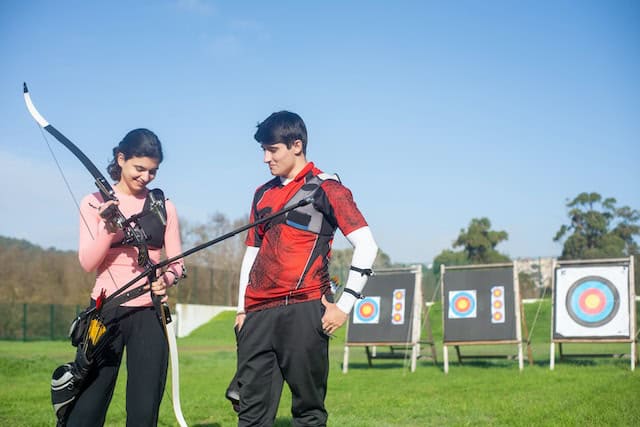
Recurve, barebow, compound or longbow? Understand the main styles before buying a single piece of kit.
Try before you buy
A first bow should match your current technique, draw length and strength - not the draw weight you hope to reach later. Borrow club equipment through your beginners’ course and ask a coach to watch you shoot several setups.
Buying early often means replacing limbs, arrows or accessories once your form settles. A club can also recommend reputable local shops and help you avoid incompatible parts.
The four common routes
Olympic recurve uses sights, stabilisers and a clicker as skills develop. Barebow uses a recurve riser without sights and rewards a simple, highly repeatable technique. Compound bows use cams and a mechanical release for a different holding and aiming experience. Longbow connects the archer with a traditional, instinctive style.
- Recurve: adaptable and widely coached
- Barebow: minimal equipment, rich technique
- Compound: precise, mechanical and highly adjustable
- Longbow: traditional materials and rhythm
A sensible first equipment list
Once your coach agrees you are ready, plan the whole system: bow, correctly spined arrows, string, sight if needed, quiver, arm guard, finger protection, bow stand and a case. Budget for fitting and advice, not just the headline price of the bow.