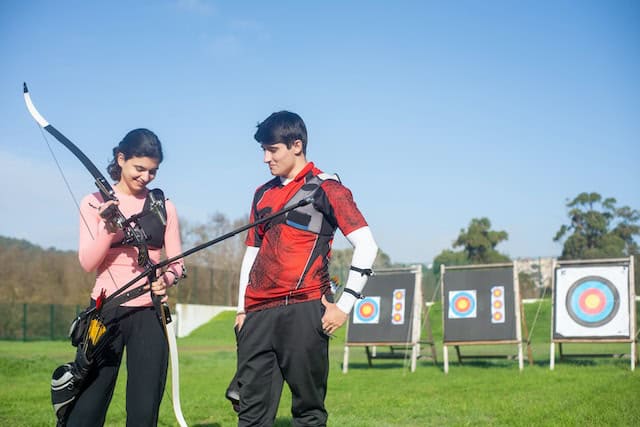
Recurve, barebow, compound or longbow? Compare the main bow styles and learn why fit, coaching and manageable draw weight matter more than price.
The short answer: start with recurve
For most beginners, the best first bow is a light, take-down recurve supplied by a club or chosen with a coach. Recurve is the most common starting style in UK club archery, so suitable equipment, instruction and spare limbs are relatively easy to find. A take-down bow also lets you change the limbs without replacing the riser as your technique develops.
That is a starting point, not a rule. Barebow, compound and longbow are all valid disciplines. The best choice is the bow you can shoot comfortably, safely and regularly with knowledgeable support nearby. Complete a beginners’ course and try more than one style before spending money.
Recurve: adaptable and widely taught
A recurve has limbs whose tips curve away from the archer. Club training bows are usually simple take-down recurves; Olympic recurve archers add a sight, stabilisers and, later, a clicker. You can begin with a clean setup and introduce accessories only when they solve a genuine need.
Recurve gives useful feedback without demanding a complicated first purchase. The archer holds the full draw weight, which encourages good alignment when that weight is sensible. Replaceable limbs make gradual progression practical. The drawback is that a complete target setup can eventually include many components, and buying all of them before your form settles often wastes money.
Barebow: simple equipment, demanding technique
Barebow normally uses a modern recurve riser and limbs without a sight, clicker or long stabilisers. The archer aims using the arrow and a consistent reference, making it an appealing choice for people who enjoy minimal equipment, field archery or a direct connection between technique and result.
It is simple rather than easy. Small changes in anchor, string position or finger placement can move the group, so good coaching still matters. A beginner can learn on the same kind of light recurve used by many clubs and decide later whether to build a competition-specific barebow setup.
Compound: precise, adjustable and more technical
Compound bows use cams, cables and stiff limbs. Their let-off reduces the weight held at full draw, and archers commonly use a mechanical release aid and a magnifying scope. This can suit archers who enjoy precise equipment setup, while adjustable models can accommodate a useful range of draw lengths and weights.
Let-off does not make a compound automatically safer or easier. The archer must first pull through the peak draw weight, and draw length, cam setting, release aid and arrows must work as a system. Compounds also need specialist servicing and should never be pressed or adjusted casually. Choose one first only when a club coach and reputable archery retailer can fit it properly and support you afterwards.
Longbow: traditional and rewarding
The English longbow offers simplicity, history and a distinctive shooting rhythm. It has fewer modern aiming aids and rewards instinct, consistent movement and patience. For the beginner already drawn to traditional archery, it may be the bow that creates the strongest reason to practise.
Longbows are less adjustable than take-down recurves, and wooden bows need appropriate stringing, storage and care. Draw weight and maximum draw length must be matched to the individual bow and archer. Coaching and loan equipment can also be less widely available, so find a longbow-friendly club before buying.
Fit matters more than bow style
Whatever style you prefer, reject any bow that forces you to raise the shoulder, lean away, collapse at full draw or rush the release. An impressive draw-weight label is not a target. The correct weight lets you draw under control, hold a sound position, let down safely and repeat the shot throughout a normal session.
A coach or specialist retailer should check handedness, draw length, bow length and the weight you actually hold at your draw length. Arrows must then be the correct length and spine for the archer and setup. Young archers need extra room for growth and should be reassessed regularly. Used equipment can offer value, but have limbs, strings, cams and arrows inspected before shooting.
- Comfortable, repeatable draw weight
- Correct bow and arrow length
- Arrows matched for spine and safety
- Local coaching and servicing support
A sensible route to your first bow
Start with a recognised beginners’ course where equipment is provided. Use several sessions to learn what a relaxed, repeatable shot feels like, then ask to try the styles your club actively supports. Tell the coach what attracts you: target scores, field courses, traditional craft, competition or relaxed social shooting.
When you are ready, set a budget for the whole kit rather than the bow alone. You may also need matched arrows, a string, finger tab or release aid, arm guard, quiver, bow stand and a protective case. Buy in person where possible, keep the first draw weight conservative and leave room to change limbs or settings. Never dry-fire a bow, and only shoot on a properly managed range. The best beginner bow is ultimately the one that fits now and helps you return to the shooting line with confidence.